13 Jul Wheel and Rim Powder Coating on Long Island: A Durable Way to Customize and Restore Your Vehicle
Your wheels have a major impact on the overall appearance of your vehicle. Unfortunately, they are also constantly exposed to road debris, brake dust, moisture, salt, grime, chemicals, and changing weather conditions.
Over time, factory or previously painted wheels may become faded, scratched, chipped, oxidized, or outdated. Replacing them can be expensive, especially when the existing wheels are structurally sound.
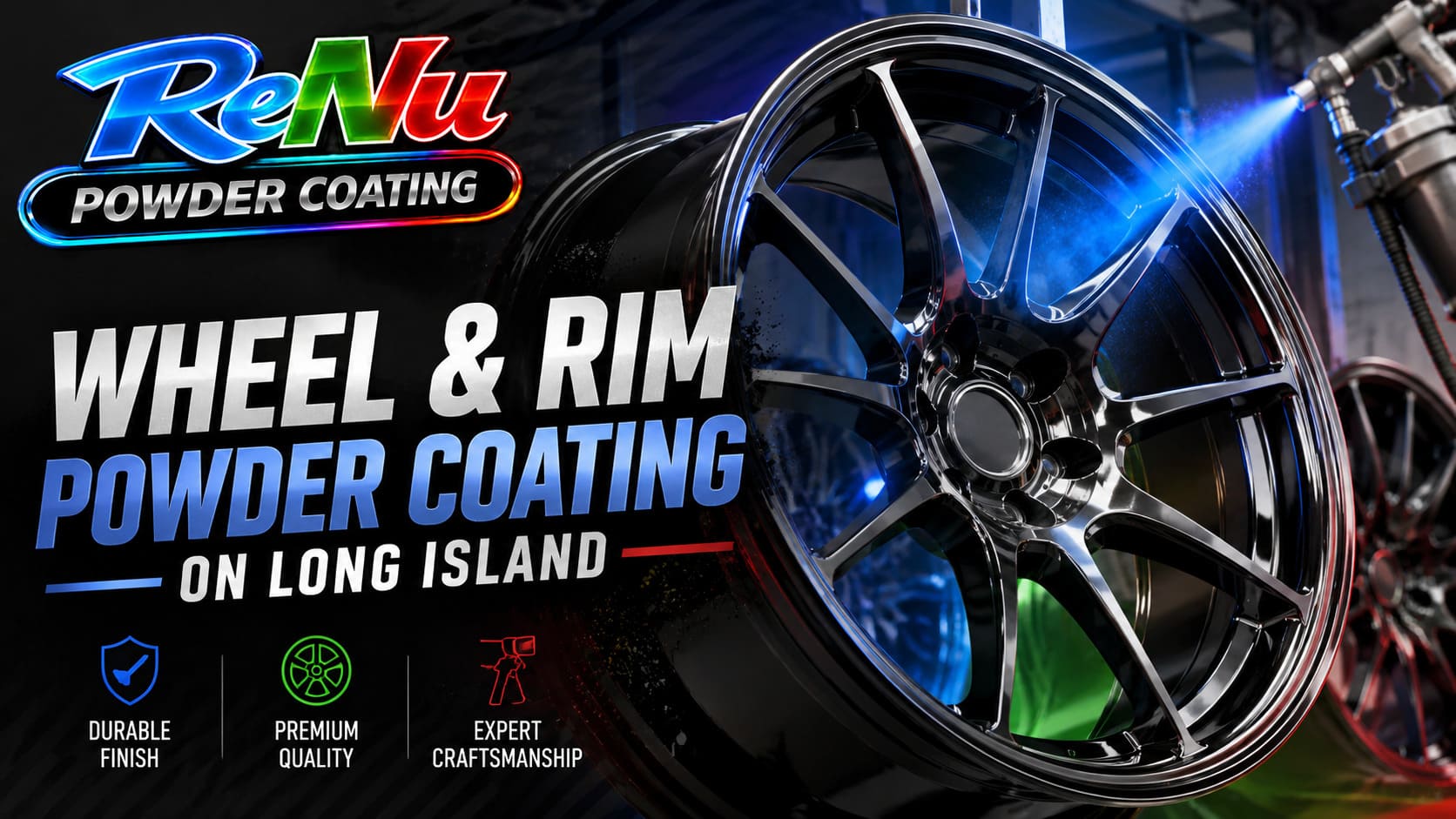
Professional wheel and rim powder coating provides an opportunity to renew their appearance, add a custom color, and create a durable finish designed for real-world driving conditions.
ReNu Powder Coating provides automotive powder coating services from its Ronkonkoma shop for customers throughout Long Island and Suffolk County.
What Is Wheel Powder Coating?
Wheel powder coating is a refinishing process in which the existing coating and surface contaminants are removed before a dry powder is electrostatically applied to the metal wheel.
The coated wheel is then placed in an industrial curing oven. Heat causes the powder to melt, flow, and form a uniform finish bonded to the surface.
Unlike conventional liquid paint, powder coating does not rely on solvents to remain in liquid form during application. The process can create a smooth, consistent finish in a broad selection of colors, textures, and gloss levels.
Why Do Vehicle Owners Powder Coat Their Wheels?
Some customers choose powder coating because their wheels are worn or damaged cosmetically. Others simply want a new look.
Common reasons include:
- Peeling or failing factory finishes
- Oxidation or surface corrosion
- Scratches and road wear
- Faded color
- Mismatched wheels
- An outdated factory appearance
- A desire for a sportier or more customized look
- Restoration of classic or specialty vehicle wheels
- Refinishing wheels during a larger vehicle restoration
Powder coating can make a dramatic visual difference without requiring the purchase of an entirely new set of wheels.
Benefits of Powder-Coated Wheels
Durable Finish
Wheels must endure harsher conditions than many other coated metal parts. Powder coating creates a hard finish that can resist everyday abrasion, minor impacts, moisture, and environmental exposure when correctly applied and maintained.
No finish makes wheels immune to severe curb impact, deep gouges, or improper chemical cleaning. However, a professionally prepared and cured coating can provide dependable long-term performance.
Consistent Appearance
Electrostatic application helps produce uniform coverage across the wheel surface, including curves, spokes, and detailed areas.
Many Color Options
Powder coating gives vehicle owners choices beyond standard factory silver. Depending on availability and project requirements, customers may select from:
- Gloss black
- Satin black
- Matte black
- Gunmetal
- Charcoal gray
- Silver
- Bronze
- White
- Custom colors
- Metallic finishes
- Textured finishes
The right choice can complement the vehicle’s paint, trim, brake components, and overall design.
Protection Against the Elements
A properly prepared coating creates a barrier between the metal and moisture, road grime, and other contaminants.
Cost-Effective Customization
When the wheels are structurally suitable for refinishing, powder coating may offer a practical way to create a new appearance without purchasing aftermarket replacements.
What Happens During the Wheel Powder-Coating Process?
The quality of the finished wheels depends heavily on the steps performed before curing.
Initial Wheel Inspection
Each wheel should be examined for its material, existing finish, corrosion, previous repairs, and visible damage. Powder coating is a refinishing process and should not be treated as a substitute for correcting structural safety problems.
Wheels that are cracked, severely bent, or otherwise compromised may require specialized evaluation or repair before refinishing.
Tire and Hardware Removal
The tire, valve stem, wheel weights, center cap, and other heat-sensitive components must generally be removed before the wheel enters the curing process.
Stripping the Existing Finish
Old paint, clear coat, failing powder, corrosion, and contaminants need to be removed. Applying a new coating over a weak or contaminated foundation can lead to adhesion problems.
Cleaning and Surface Preparation
The exposed metal is thoroughly cleaned and prepared. Oils, residues, brake dust, and oxidation can interfere with coating performance if they are not properly addressed.
Masking Critical Areas
Certain surfaces should not receive powder. Mounting areas, lug openings, threads, and other functional sections may require appropriate masking or protection based on the wheel design.
Powder Application
The selected powder is sprayed electrostatically onto the grounded wheel. The electrical charge helps attract the powder to the metal and promotes even coverage.
Oven Curing
The wheel is heated according to the coating manufacturer’s requirements. The correct combination of time and temperature is essential for proper flow and cure.
Final Quality Review
After cooling, the finish is checked for consistency, coverage, and overall appearance.
Powder Coating Versus Painting Wheels
Both powder coating and liquid paint can change a wheel’s appearance, but the application methods and performance characteristics are different.
Liquid paint is sprayed as a wet coating and may require multiple layers, including primer, color, and clear coat. Powder is applied dry and transformed into a continuous finish through heat.
Powder coating is often selected for wheels because of its durability, even coverage, and range of finish options. Its success still depends on correct stripping, preparation, masking, application, and curing.
A poorly prepared powder-coated wheel can fail, just as poorly prepared paint can fail. The process and workmanship matter as much as the material.
Can Previously Painted or Powder-Coated Wheels Be Refinished?
In many cases, yes. The previous material typically needs to be removed so the new coating can bond to a properly prepared surface.
The wheel’s condition and construction will determine the appropriate preparation process. Wheels with extensive corrosion, multiple previous coatings, unknown repairs, or structural damage may require additional attention.
Customers should provide any available information about previous wheel repairs or refinishing when requesting a quote.
How Long Does Wheel Powder Coating Last?
There is no single lifespan that applies to every wheel. Performance depends on:
- Surface preparation
- Powder quality
- Correct curing
- Road and weather exposure
- Driving conditions
- Cleaning products
- Maintenance
- Impacts from curbs or debris
- Exposure to road salt and harsh chemicals
A high-quality powder-coated finish that is properly maintained can provide years of attractive service. Regular cleaning and careful handling can help extend its life.
Caring for Powder-Coated Wheels
Brake dust, dirt, salt, and road contaminants should be removed regularly. Use mild automotive soap, water, and cleaning tools that will not scratch the finish.
Avoid highly acidic wheel cleaners, aggressive solvents, and abrasive brushes unless the product is confirmed to be safe for powder-coated surfaces. Clean spills promptly and rinse the wheels thoroughly.
Allow wheels to cool before washing them. Applying cold water or chemicals to extremely hot wheels may place unnecessary stress on the finish.
Wax or sealant products designed for coated wheels may provide additional convenience, but they should always be tested for compatibility.
Wheel Powder Coating for Cars, Trucks, and Specialty Vehicles
Powder coating may be appropriate for wheels used on many types of vehicles, including:
- Passenger cars
- Pickup trucks
- SUVs
- Classic vehicles
- Muscle cars
- Performance vehicles
- Show cars
- Restoration projects
- Certain motorcycle components
- Specialty automotive projects
Every project should be reviewed individually. Wheel material, dimensions, condition, and previous coatings can all affect the refinishing process.
Selecting the Right Finish
Color should complement the vehicle rather than simply follow a temporary trend. Gloss black provides a bold, polished appearance, while satin black offers a more understated look. Gunmetal and bronze can create contrast without appearing overly bright.
Consider the vehicle’s body color, trim, grille, badges, brake calipers, and intended use. A daily-driven truck may benefit from a different finish than a garage-kept show vehicle.
ReNu Powder Coating can discuss available options and help customers select an appropriate appearance for their project.
Request Wheel Powder Coating in Ronkonkoma
Worn or outdated wheels can diminish the appearance of an otherwise well-maintained vehicle. Professional powder coating can restore a clean, coordinated look while adding a durable protective finish.
ReNu Powder Coating serves automotive enthusiasts, vehicle owners, restoration professionals, and commercial customers from 90 Remington Boulevard in Ronkonkoma, New York.
Call (631) 249-RENU (7368) or submit an online quote request to discuss wheel and rim powder coating on Long Island.