
21 Sep Masking and Fit: Planning Powder Coating for Functional Metal Parts
A metal component can look excellent and still create trouble if a finished surface interferes with the way it fits into an assembly. Threads, holes, contact points, and mating faces deserve attention before coating begins. For functional parts, discussing where the finish belongs is just as useful as choosing how it should look.
Customers arranging powder coating on Long Island may be bringing brackets, custom fabrications, fixtures, or other metal components. Each project has its own requirements. Clear information about assembly and intended use helps the shop understand the job. It also reduces the risk of assuming that every exposed surface should receive the same treatment.
Explain what the component does
Describe the part’s role in ordinary language and identify the items it connects to. A simple photograph of the finished assembly can be helpful alongside images of the separate component. Explain whether it slides, pivots, bolts into place, supports another object, or serves only a decorative purpose. Function gives context to the finishing discussion.
If a drawing or specification exists, provide the current version and identify the person who can answer technical questions. Do not rely on an old print when the component has changed. For a custom project, make sure the fabricator, customer, and coating shop are discussing the same part and the same intended installation.
Recognize that coating adds material
Powder coating forms a film on the surface. Where a component fits closely against another part, that added material may matter. The appropriate thickness depends on the coating system and application; more is not automatically better. Explain critical clearances and requirements rather than assuming a visually thin finish will have no effect on fit.
Do not invent a tolerance from a photograph or general online advice. The designer, manufacturer, or appropriate technical professional should establish what the assembly requires. The coating shop can then discuss the finishing approach within those constraints. An unresolved dimensional requirement should be clarified before a batch is processed, not discovered during installation.
Identify areas that may need masking
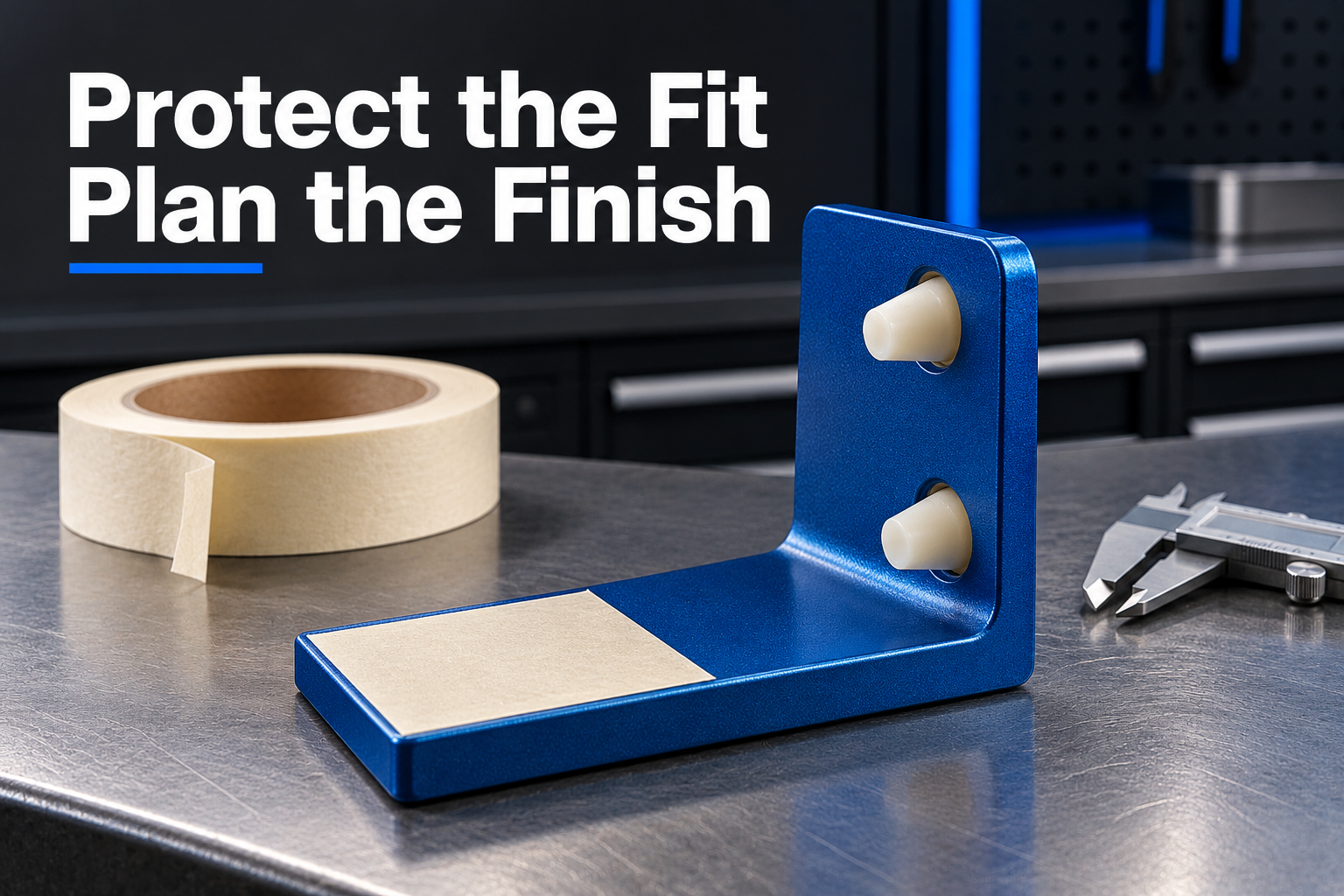
Masking or plugging can be used to keep selected areas free from powder. Depending on the project, the discussion may involve threads, bores, mating faces, or other functional locations. Manufacturer guidance describes high temperature masking materials and silicone plugs for this purpose. The suitable method should be selected for the actual part and process.
Mark the requirements clearly on an agreed drawing or photograph and confirm them with the shop. Avoid relying on a vague instruction such as keep the important holes clear. If several similar holes have different functions, identify them individually. A short, unambiguous explanation is easier to follow than a collection of assumptions about what the part probably does.
Separate appearance requirements from functional requirements
Identify the faces that will be visible after assembly and the areas where function takes priority. A hidden mating surface may have different requirements from a decorative front panel. Discuss both before work starts so the shop can understand the project as a whole. The most noticeable surface is not necessarily the most technically important one.
Ask how agreed masking boundaries may appear when the component is finished. If a transition will remain visible, discuss the expected appearance and whether the design needs reconsideration. A finish sample can help with color and texture, while an actual part review may be needed to clarify how the boundaries work on that component.
Discuss mixed materials and removable components
Identify bearings, seals, bushings, plastic pieces, adhesives, electrical elements, and other materials attached to the metal. Powder coating commonly involves oven curing, so the suitability of the complete assembly must be reviewed. Do not assume that an item can be processed intact simply because the largest visible section is metal.
Ask what must be removed, who will remove it, and how the parts will be kept together for later assembly. If disassembly requires specialist knowledge, arrange appropriate assistance. Preserve the information needed to reinstall components correctly. A clear sequence makes it easier to understand where coating ends and other project responsibilities begin.
Use a sample part when the project warrants it
For repeat components or an unfamiliar assembly, ask whether reviewing a representative part before the full group would be useful. The decision depends on the project, quantities, and shop arrangements. A sample review can focus the conversation on actual geometry and interfaces instead of relying entirely on a description of the intended fit.
Agree on what needs to be checked and who will approve the next stage. Color appearance, masked locations, and assembly function are separate questions. Avoid calling a sample approved when only its color has been reviewed. Record the outcome clearly so the same understanding can guide the remaining work if the project proceeds.
Walk through a simple assembly example
Imagine a bracket that bolts to a frame and holds a removable panel. Its visible face may need a consistent appearance, while its mounting interface must meet a specified fit requirement. The holes might have different purposes even though they look similar in a photograph. Explaining the assembly helps turn those observations into questions that can be answered before coating.
Provide the current drawing, identify the mating component, and state which professional has established the functional requirements. Ask how the proposed finishing plan addresses the identified areas and what will be checked afterward. Avoid attempting to resolve a fit concern by removing coating yourself without an agreed plan.
The same approach applies to more complicated parts: describe the function, identify the requirement, confirm the instruction, and keep the decision with the order. That makes appearance and function part of one coordinated project. Confirm unresolved details before sending the complete batch.
Keep the requirements with the order
Provide one current set of instructions, a clear count, and an identified contact person. If a requirement changes, confirm the revised instruction before processing continues. Similar looking parts should remain distinguishable where their masking or finish differs. Organization is particularly useful when a project involves several versions or repeated deliveries over time.
ReNu Powder Coating works with residential and commercial metal projects from its Ronkonkoma location. To discuss functional parts, preparation, and finish requirements, call (631) 249-7368 or visit ReNuPowderCoating.com. Bring the drawings, photographs, and assembly information that explain both the appearance you want and the areas where fit matters.