

21 Oct Planning Repeat Powder Coating Orders for Commercial Metal Parts
A successful first order is a useful foundation for future work, but repeat orders still need clear instructions. Part designs change, quantities vary, and a remembered color can become less precise with time. Keeping the important details together makes it easier to discuss the next batch and identify differences before they affect the project.
For Long Island fabricators, contractors, property managers, and businesses, repeat powder coating orders benefit from a simple, consistent handoff. The goal is not to create paperwork for its own sake. It is to make sure the shop receives the current parts, finish requirements, and timing information needed to evaluate and organize the work.
Give every part a clear identity
Use a practical part name, number, or other agreed identifier that distinguishes one component from another. Similar brackets may differ in dimensions, hole locations, or intended use. If those differences matter, identify them explicitly. A single photograph of a mixed box may not explain which pieces belong to which version of the order.
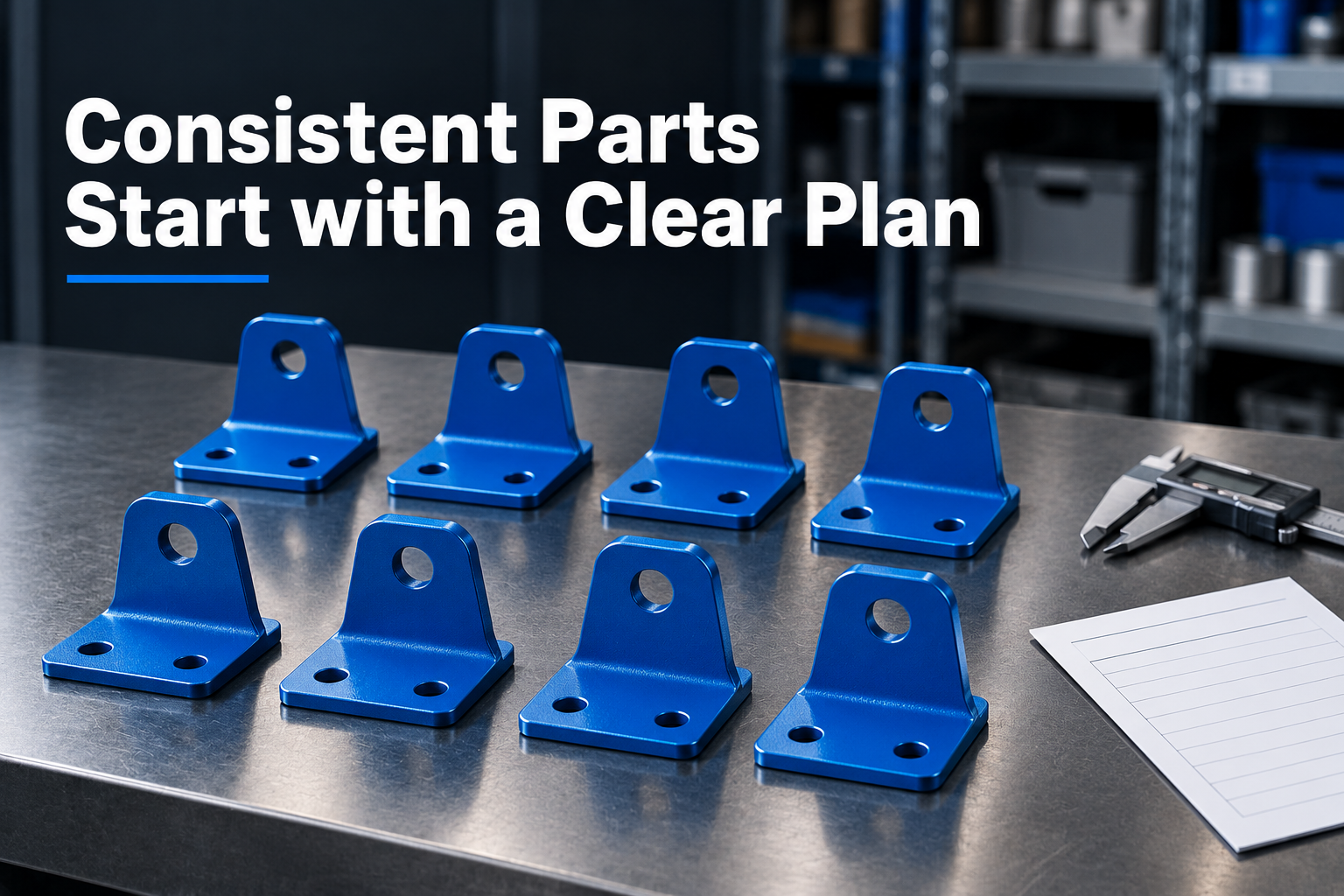
Provide an accurate count for each type and confirm how the items will be grouped. Keep the identifying information with the delivery paperwork rather than relying only on removable packaging. Where a drawing is supplied, include its current revision. The shop should not have to infer whether a new delivery matches the last batch.
Preserve the actual finish reference
Record the agreed product or finish information supplied for the project, including the appearance details that matter. A phrase such as the same blue as before can be ambiguous when several jobs or samples have been discussed. Ask what reference information the shop needs to identify the intended finish on a later order.
If a retained physical sample is part of the approval process, agree on how it will be identified and stored. Keep it separate from unrelated examples that merely show a general color preference. A screen image or weathered installed component may not provide the same reference as an agreed sample reviewed under suitable conditions.
Carry masking requirements forward accurately
Repeat parts may have areas that need to remain free from coating or receive particular attention for assembly. Provide the agreed instructions with each relevant order and identify any changes. Do not assume an earlier conversation will automatically cover a revised design, a new component version, or a different person coordinating the delivery.
If the project has functional tolerances, the appropriate technical professional should establish those requirements. Make them available before processing is planned. Appearance approval and functional approval are different matters. A part that looks like the earlier batch may still need a separate review when its geometry or assembly role has changed.
Describe the incoming condition
Tell the shop whether the parts are new fabrication, previously coated items, or components requiring additional evaluation. Note changes in material, surface condition, storage, or earlier treatment. Similar finished appearance does not mean every incoming part will require the same preparation. Useful information begins before the first color or quantity discussion.
Keep different conditions identifiable when delivering a mixed group. Explain which pieces belong together and where any uncertainty remains. If a supplier has changed, say so rather than assuming that an unchanged part number guarantees identical material and fabrication. The coating shop can then ask the questions appropriate to the actual delivery.
Agree on approval before scaling up
For a new design, important change, or demanding appearance requirement, ask whether a representative sample or initial group should be reviewed first. Confirm what the approval covers and who can give it. A review limited to color should not be treated as an approval of every dimensional, functional, or project requirement.
Keep the approval record concise and specific. Identify the part version, finish reference, and any comments that require action. If the sample reveals a concern, resolve the instruction before treating it as the standard for repeat production. A clear decision helps the next conversation focus on the agreed result rather than competing recollections.
Coordinate quantities and timing realistically
Explain the total expected need, the immediate order, and whether deliveries will occur in stages. Ask what timing can be confirmed and which information is needed before scheduling. Avoid promising a customer a completion date based only on an earlier job. A different quantity, condition, or finish can change the planning discussion.
Choose one contact who can answer questions and authorize agreed changes. When several departments or subcontractors are involved, share the current instructions through that person. A clear route for decisions is often more helpful than a long message chain in which different people provide partial updates without confirming which instruction is final.
Keep a useful repeat order summary
A short summary can include the part identifier, drawing revision, quantities, finish reference, masking instructions, approval contact, and agreed responsibilities. Attach the current information rather than forwarding an entire history of unrelated messages. Note which details have changed since the previous order so they receive appropriate attention.
Review the summary before every delivery. If nothing has changed, confirm that explicitly. If something has changed, explain the difference and ask whether it affects the proposed work. This small administrative step can support a clearer exchange between the customer, fabricator, and finishing shop. Save the summary where everyone coordinating the order can find it.
Include collection, packaging, and feedback
Discuss how finished parts should be collected, grouped, and protected for the next stage. Identify any handling or labeling needs before the order is completed. Confirm responsibilities rather than assuming every project includes the same packaging or delivery service. The way parts travel onward is part of the practical handoff, especially when visible surfaces matter.
After collection, report any concern with the part identification, photographs, and a clear description of the issue. Keep useful feedback with the order record so future work benefits from it. Manufacturer quality guidance emphasizes reviewing process and results; customers support that discussion by explaining the specific outcome rather than supplying a vague statement that something seems different.
ReNu Powder Coating is located in Ronkonkoma and works with commercial and residential metal projects. To discuss a repeat order, call (631) 249-7368 or visit ReNuPowderCoating.com. Bring the current part information, agreed finish reference, quantities, and planning questions so the next batch begins with a clear understanding of the work.