
14 Sep Restore or Replace? Evaluating Worn Metal Before Powder Coating
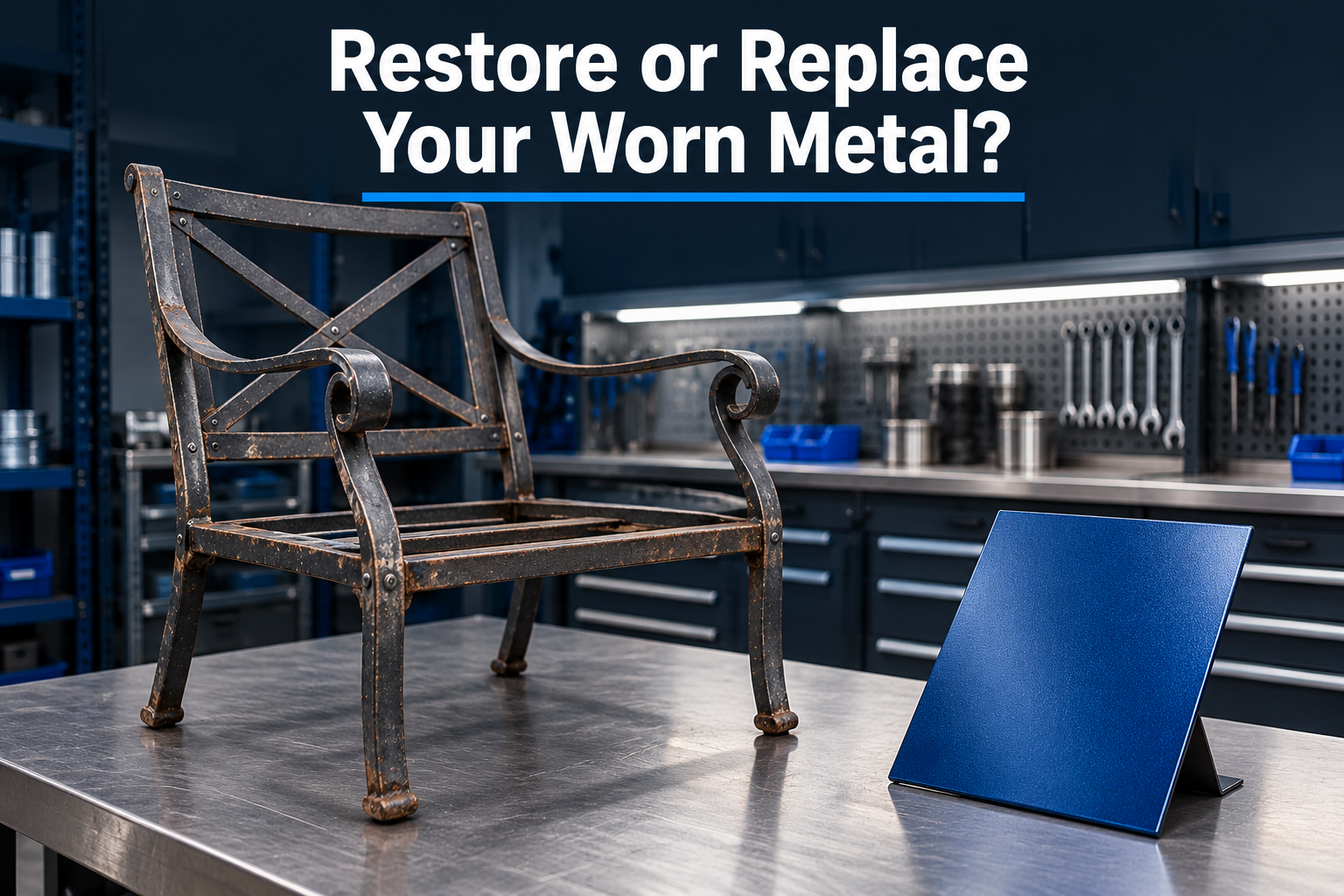
A tired finish can make a useful metal object look ready for replacement. Faded furniture, chipped frames, and weathered fixtures may still deserve a careful assessment before they are discarded. The important question is whether the underlying item is suitable for continued use and a new finish, rather than simply whether another color would look attractive.
For Long Island homeowners and businesses, the restore or replace decision combines condition, function, logistics, and personal value. Powder coating may be part of a sensible renewal project, but it is not the answer to every problem. A measured review helps separate an appearance issue from damage that requires another kind of attention.
Identify what you want to preserve
Start with the reasons you like the object. It may fit an unusual space, match other pieces, or have a design you cannot easily replace. A sturdy older frame can also be more appealing to you than a different item chosen only because it is new. Write down the qualities that make restoration worth discussing.
Next, identify what you want to change. Perhaps the color no longer suits the setting, or the existing finish has worn unevenly. Separating the desirable features from the problems creates a more useful conversation. You can ask whether a new finish addresses the actual concern instead of expecting it to transform every aspect of the item.
Distinguish appearance from structural condition
Look for visible signs that deserve professional review, including loose connections, cracks, missing material, bent sections, or instability. Do not assume these concerns disappear when the surface looks better. A coating covers a suitable surface; it does not replace metal that has been lost or establish that an object is safe for its intended function.
For load bearing, protective, vehicle, or otherwise critical components, consult the appropriate qualified professional about condition and repair. Keep that evaluation separate from color selection. A railing, wheel, and decorative table frame have different responsibilities. The decision to continue using an item should not rest on an attractive finish sample or a photograph alone.
Describe corrosion without guessing its depth
Photograph visible rust and worn areas in clear light. Include edges, joints, feet, and the reverse where accessible. Tell the shop how the item has been stored and whether you know of earlier repairs. These details help begin an assessment, but they do not establish how much sound metal remains beneath a deteriorated surface.
Avoid scraping, aggressive grinding, or applying a temporary product before discussing the project. The appropriate preparation depends on the material and condition. Manufacturer guidance emphasizes the importance of a properly prepared surface for coating adhesion. That preparation is part of a planned finishing process, not proof that every corroded object can be renewed successfully.
Consider the whole assembly
An item may combine metal with cushions, plastic inserts, rubber feet, bearings, glass, electrical parts, or other components. Identify what is present before planning the work. Ask which pieces must be removed and who is responsible. An assembly that looks simple from the front may require more coordination than a separate metal frame.
Think about the condition of the parts that will return after coating. A newly finished chair frame may still need suitable feet or replacement upholstery. Include those needs in the overall decision. Do not assume the coating shop provides every related service, and confirm any outside repair or replacement work before arranging the schedule.
Compare complete project costs fairly
When comparing renewal with replacement, include the work actually needed in each option. Preparation, agreed finishing, transportation, related repairs, and reassembly may all matter. A replacement price may also leave out delivery, installation, or the removal of the old item. Compare realistic totals rather than one attractive number from either side.
Avoid assuming restoration must always be less expensive. Sometimes the design, fit, or personal importance makes a project worthwhile even when the lowest price is not the main benefit. In other cases, the underlying condition or practical limitations favor replacement. A useful quote helps you understand the choice instead of forcing a predetermined answer.
Decide what finish quality means for this item
Explain whether you expect an even renewed appearance or have a particular cosmetic standard in mind. Old surface damage, construction details, and previous repairs may affect what can reasonably be achieved. Ask the shop to discuss limitations before work begins. A realistic expectation is more useful than assuming a new coating makes an older object indistinguishable from new.
If the piece belongs to a set, consider whether the project should include the related items. A single renewed chair may look different beside several weathered ones even when the selected color is similar. Discuss the complete visual goal and review an appropriate sample. This helps connect the finishing decision with the way the pieces will be used.
Look beyond the purchase receipt
An item’s original price does not automatically tell you whether renewal is worthwhile today. Consider its current usefulness, construction, condition, and the alternatives available. A piece that fits a particular space may deserve investigation even when its purchase receipt is long gone. An expensive item can still be unsuitable for refinishing if the underlying condition is poor.
Discuss uncertainty openly. If inspection reveals a problem that changes the plan, ask what decisions need to be made before further work is authorized. Do not let the effort already spent gathering photographs become the reason to continue with an unsuitable project. The purpose of evaluation is to make a better decision, including choosing replacement when that is the more appropriate result. Keep the decision focused on what the item can reasonably offer after assessment.
Make the decision before committing to transport
Gather photographs, dimensions, quantities, and a short description of your concerns. Ask what additional inspection is needed and whether any repairs should come first. Coordinate the sequence before loading a large object or removing an installed component. Good planning gives you a clearer understanding of the project while there is still room to reconsider.
ReNu Powder Coating in Ronkonkoma can discuss suitable residential and commercial metal finishing projects. Call (631) 249-7368 or visit ReNuPowderCoating.com to explain what you have and what you hope to improve. An informed conversation begins with the item’s actual condition, intended use, and the result you want to achieve.