15 May The History of Powder Coating: From Early Innovation to Modern Metal Finishing in 2026
Powder coating has become one of the most trusted finishing methods for metal products, automotive parts, motorcycle accessories, railings, patio furniture, retail fixtures, gates, garden equipment, and industrial components. For companies like ReNu Powder Coating, the process represents more than color. It is about protection, durability, restoration, and giving metal surfaces a renewed life.
Today, many customers understand powder coating as a tough, attractive finish that can resist rust, chips, scratches, fading, and everyday wear. ReNu’s current messaging describes powder coating as a high-quality finish for parts “built to work,” including automotive, marine, industrial, and custom fabrication projects. (Powder Coating By Renu) But the process did not become popular overnight. The story of powder coating stretches back nearly a century and includes major breakthroughs in chemistry, electricity, manufacturing, environmental regulation, and modern design.
Early Ideas: The Roots of Powder Coating
The origins of powder coating are closely tied to the study of electricity and electrostatic attraction. Before modern powder coating equipment existed, scientists and engineers were already exploring how particles could be attracted to surfaces through electrical forces. By the early 20th century, patents and systems were being developed around electrostatic coating methods, creating the foundation for what would later become a major finishing technology. (Pulverkönig)
In the 1940s, early experiments began using powdered thermoplastic materials to coat metal. One of the first methods involved flame spraying, where powdered plastic materials were heated and applied to a surface. This was an important step, but it was not yet the clean, efficient, controlled process that powder coating would later become. (Powder Kote Industries)
The idea was promising: instead of using liquid paint filled with solvents, manufacturers could use a dry powder that melted, flowed, and bonded to metal. The challenge was developing an application method that was consistent, repeatable, and practical for industry.
The 1950s: Dr. Erwin Gemmer and the Fluidized Bed
The modern history of powder coating took a major leap forward in the 1950s with the work of German scientist Dr. Erwin Gemmer. Gemmer developed the fluidized bed application process, which allowed heated metal parts to be dipped into a bed of powder that behaved almost like a liquid when air was passed through it. The powder would melt onto the hot metal, creating a protective coating.
Gemmer filed for a patent in Germany in 1953, and the patent was issued in 1955. Between the late 1950s and mid-1960s, most powder coatings were applied using this fluidized bed process. These early coatings were often thick and functional, commonly used for electrical insulation, corrosion resistance, and abrasion protection. (PCI Magazine)
This period was important because it proved that powder coating could be more than an experiment. It could protect metal in demanding applications. However, the early fluidized bed coatings were not always ideal for decorative work. Coating thickness could vary, and the process was better suited for certain industrial uses than for fine cosmetic finishes.
The 1960s: Electrostatic Spray Changes the Industry
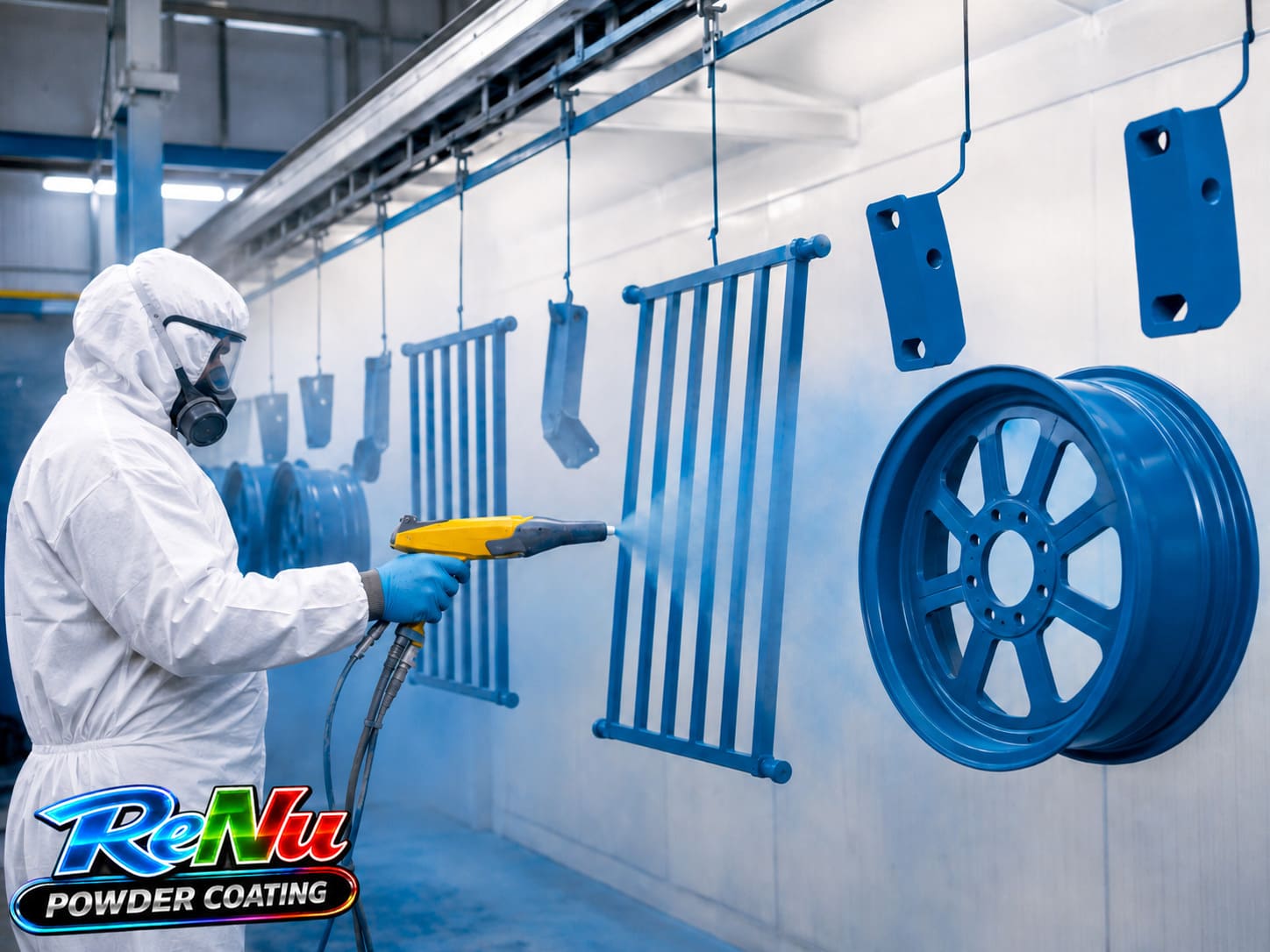
The next major breakthrough came with electrostatic spray application. In this process, powder particles are electrically charged as they leave the spray gun. The grounded metal part attracts the charged powder, helping it cling evenly to the surface before curing in an oven.
Electrostatic spray entered the marketplace in the early 1960s and changed the future of powder coating. It gave finishers better control, more even coverage, and the ability to apply thinner, more decorative films. A powder coating timeline notes that the electrostatic spray process, developed by Pieter de Lange, entered the marketplace between 1962 and 1964. (Powder Kote Industries)
This advancement helped powder coating move beyond heavy industrial protection into more visible applications. Manufacturers could now achieve attractive finishes on products where appearance mattered, including appliances, furniture, shelving, bicycles, metal fixtures, and eventually automotive and custom parts.
The 1970s and 1980s: Growth Across Industries
By the late 1970s and 1980s, powder coating began to grow rapidly. Companies saw several advantages. Powder coating could create a durable finish. It produced less waste than many liquid coatings. Overspray could often be collected and reused. And because powder coatings generally contain little or no solvent, they helped manufacturers reduce emissions associated with traditional liquid paints.
During this period, more industries began switching from solvent-based paint systems and porcelain enamel to powder coating. Automotive parts, large appliances, bicycles, lawn furniture, metal shelving, electrical components, and other products became common powder coating applications. Industry experts describe the late 1970s and 1980s as a period of rapid growth, driven by improvements in application equipment, resin technology, and decorative finish quality. (powdercoatedtough.com)
This shift helped establish powder coating as a serious competitor to traditional paint. It was no longer just a technical coating for industrial protection. It became a practical finish for both performance and appearance.
The 1990s: Better Equipment, Better Finishes
The 1990s brought more improvements in powder technology, application systems, and production efficiency. Powder delivery systems became more refined. Color options expanded. Finish textures became more versatile. Manufacturers could produce gloss, matte, metallic, textured, wrinkle, and specialty finishes with increasing consistency.
This era also helped powder coating become more accessible to specialty shops and custom finishers. Powder coating was no longer limited to large industrial manufacturers. Smaller businesses could serve car enthusiasts, motorcycle owners, homeowners, fabricators, contractors, and local manufacturers.
That growth opened the door for companies like ReNu Powder Coating, which has served customers with custom powder coating for automotive and motorcycle accessories, railings, lawn furniture, retail display fixtures, bicycle frames, entry gates, kitchen appliances, garden equipment, and more. ReNu is listed as being in business since 2000, with a focus on customer satisfaction and experienced technicians. (Yellow Pages)
The 2000s: Powder Coating Becomes Mainstream
By the 2000s, powder coating had become a common choice for consumers, manufacturers, and restoration projects. Customers began to understand that powder coating could do more than make metal look good. It could help protect surfaces from rust, chipping, fading, and scratching.
For local customers, this made powder coating especially valuable. Patio furniture could be restored instead of replaced. Motorcycle and car parts could be customized. Gates, railings, and fixtures could be refinished with long-lasting color. Commercial and industrial parts could be coated for both function and appearance.
This practical value is central to ReNu’s service offering. ReNu’s website emphasizes durable, high-quality powder coating for real-world use, including automotive, marine, industrial, and custom fabrication needs. (Powder Coating By Renu)
The 2010s: Environmental and Performance Advantages
During the 2010s, powder coating benefited from growing interest in more environmentally responsible finishing options. Traditional liquid coatings can contain solvents that release volatile organic compounds, often called VOCs. Powder coating generally has little or no volatile emissions, which is one reason it has continued to expand into more applications. A ReNu business profile also notes that powder coating provides excellent appearance and superior protection while containing little or no volatile emissions. (Yellow Pages)
Performance expectations also increased. Customers wanted finishes that could survive outdoor exposure, road use, moisture, heat, handling, and regular cleaning. Powder technology continued to improve with better pretreatment systems, improved resins, and more specialized powders for specific environments.
Powder Coating in 2026: Durable, Custom, and Built for Modern Needs
By 2026, powder coating is no longer viewed as a new or experimental technology. It is a proven metal finishing process used across residential, commercial, automotive, marine, industrial, and custom markets.
Modern powder coating offers customers:
- Strong protection against corrosion and wear
- A wide range of colors and textures
- Better durability than many traditional paint finishes
- A clean, efficient finishing process
- Excellent options for restoration and customization
- Long-lasting value for metal products
For customers in New York and Long Island, ReNu Powder Coating represents the modern evolution of this technology. The company provides services for both residential and commercial needs and promotes the idea that “your vision becomes RENU.” (Powder Coating By Renu)
Why the History of Powder Coating Matters
Understanding the history of powder coating helps customers appreciate why the process is so effective today. What began as early experiments with powdered plastics and electrostatic attraction has become a refined finishing solution trusted across industries.
From Dr. Gemmer’s fluidized bed process in the 1950s, to electrostatic spray in the 1960s, to mainstream industrial growth in the 1980s, to today’s custom colors, durable finishes, and environmentally conscious applications, powder coating has earned its place as one of the most reliable ways to protect and renew metal.
For ReNu Powder Coating customers, that history shows up in every project: stronger finishes, better appearance, longer-lasting protection, and the ability to make old metal look new again.
ReNu Powder Coating continues that tradition by helping customers protect, restore, and customize the metal parts and products they rely on every day.